From Passive Shield to Autonomous Instrument
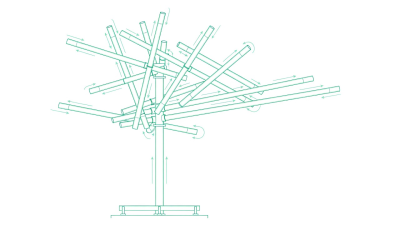
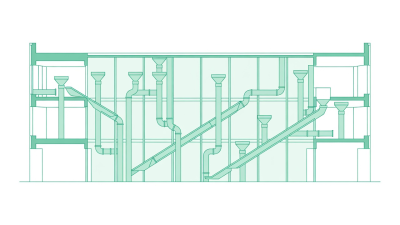
Throughout most of architectural history, buildings have been designed as acoustic barriers: keeping interior sounds in and exterior noise out. Responsive sound architecture upends this relationship. By integrating tuned cavities, resonant flue pipes, and mechanically shifting surfaces directly into building envelopes, architects transform entire facades into self-generating instruments.
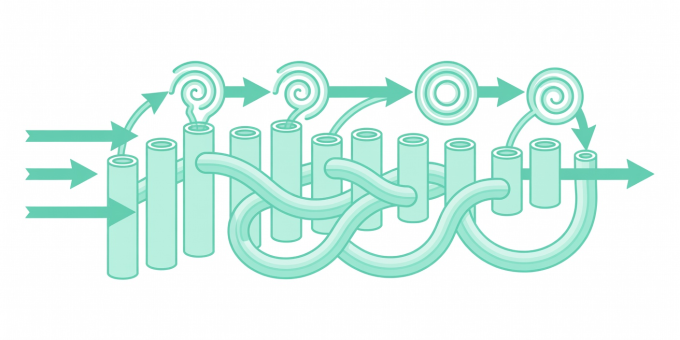
The acoustic physics behind these structures is rooted in vortex shedding and fluid dynamics. When steady wind flows across a cylindrical structure or pipe opening, alternating low-pressure vortices form in its wake—known as the von Kármán vortex street. If the frequency of these shed vortices matches the natural resonant frequency of the pipe column, the air column oscillates in sympathetic resonance, producing clear aeolian tones.
Explanatory mechanism of wind-driven flue pipe resonance. Mark diagrams as explanatory rather than measured acoustic simulations.