The Physics of Water Reflection and Refraction
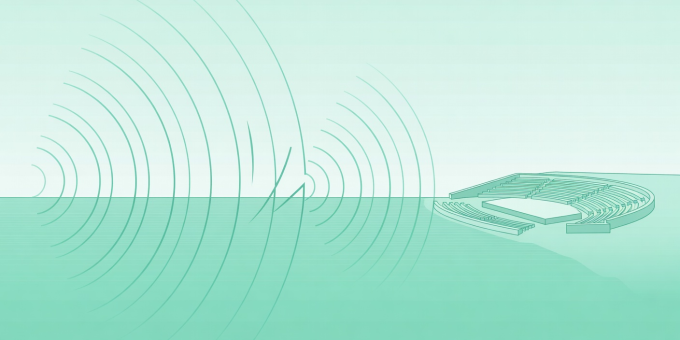
A still water surface has an acoustic absorption coefficient close to 0.01 across most audible frequencies. This means that nearly 99% of acoustic energy striking the water bounces forward rather than being absorbed. When singers project from an open-water stage toward a shore-based audience, the sound waves reflect off the water's surface, creating a specular reflection that joins the direct sound wavefront.
However, open water creates atmospheric challenges. As dusk falls over a lake, cool water chills the adjacent layer of air while upper air layers remain warm. This temperature gradient bends sound waves downward toward the water surface in a phenomenon known as acoustic temperature inversion, allowing sound to carry over distances far greater than over land. Conversely, midday solar heating creates updrafts that bend sound waves into the upper atmosphere, robbing outdoor listeners of vocal presence.
Diagrammatic representation of temperature inversions over water and specular lake reflections. Mark diagrams as explanatory rather than measured acoustic simulations.